
Finding the best crypto tax software allows you to take control of your finances while saving time. If you have ever stared at a long list of trades, transfers, and wallet activity and felt your stomach drop, we get it. Tax season gets stressful fast when your records are scattered, and every transaction feels like one more thing to figure out. The right software changes that. We are talking about tools that pull your data together and sort the numbers.
In this review, we break down the top picks for 2026 so you can find one that fits your budget. You also learn about factors to consider when choosing software. Read on to find out about the top 10 best crypto tax software options for 2026 and how they can transform the way you handle your crypto taxes.

Top Crypto Tax Software Compared: Free & Paid
| Software | Best For | Pricing | Free Plan | Exchanges Supported | Countries |
| CoinLedger | Easy imports, TurboTax integration | Starts $49 per year (Hobbyist), $99 (Investor), $199+ (Pro, transaction-based) | Free preview, portfolio tracking | All exchanges, NFTs, DeFi, 10,000+ cryptocurrencies | 100+ (US, Germany, international) |
| Koinly | DeFi, staking, multi-chain | Starts $49 (Newbie), $99 (Hodler), $179 (Trader) per year | Free report preview | 800+ (Coinbase, Kraken, Solana, more) | 20+ countries |
| CoinTracker | Coinbase users, tax loss harvesting | Starts $59 (Base), $199 (Prime), $599+ (Ultra) per year | Limited free plan | 500+ wallets and exchanges | Primarily US, international support |
| Summ | NFTs, DeFi, full reports | Starts $49 (Rookie), $99 (Hobbyist), $249 (Investor), $499 (Trader) per year | Free preview | 3,500+ sources | Multiple, US-focused |
| ZenLedger | Professionals, full-service | Silver $49, Gold $199, Platinum $399 per year | Free tax software plan | 400+ exchanges, DeFi, NFTs | US and international |
| CoinTracking | Portfolio analysis, detailed reports | Free plan, Starter $49, Pro $159, Expert $239 per year | Free account | 300+ APIs | 120 countries |
| Awaken | DeFi-focused users | Fish $99, Dolphin $199, Whale $599 per year | Trial available | Multiple blockchains | Global |
| Coinpanda | NFTs, global users | Hodler $79, Trader $149, Pro $249, Satoshi $389 per year | Free start | 900+ wallets and exchanges, 2,000+ DeFi | 65+ countries |
| TokenTax | Advanced users, pro services | Basic $49, Premium $199, Pro $1,999, VIP $3,499 per tax year | Preview available | 300+ integrations | US and international |
| Bitcoin.Tax | Simple filings | Premium $54.95, Premium Extra $69.95, Deluxe $99.95 per year | Free preview | 100+ integrations | Primarily US |
Best Crypto Tax Software: Full Reviews
Managing cryptocurrency taxes requires precision and the right tools to simplify the process. With countless transactions, varying tax regulations, and the complexities of DeFi and NFTs, having reliable software helps. The right platform can save time, reduce errors, and help you stay compliant. Here are the top best crypto tax software options to try.
1. CoinLedger – Best for Easy Imports and TurboTax Integration
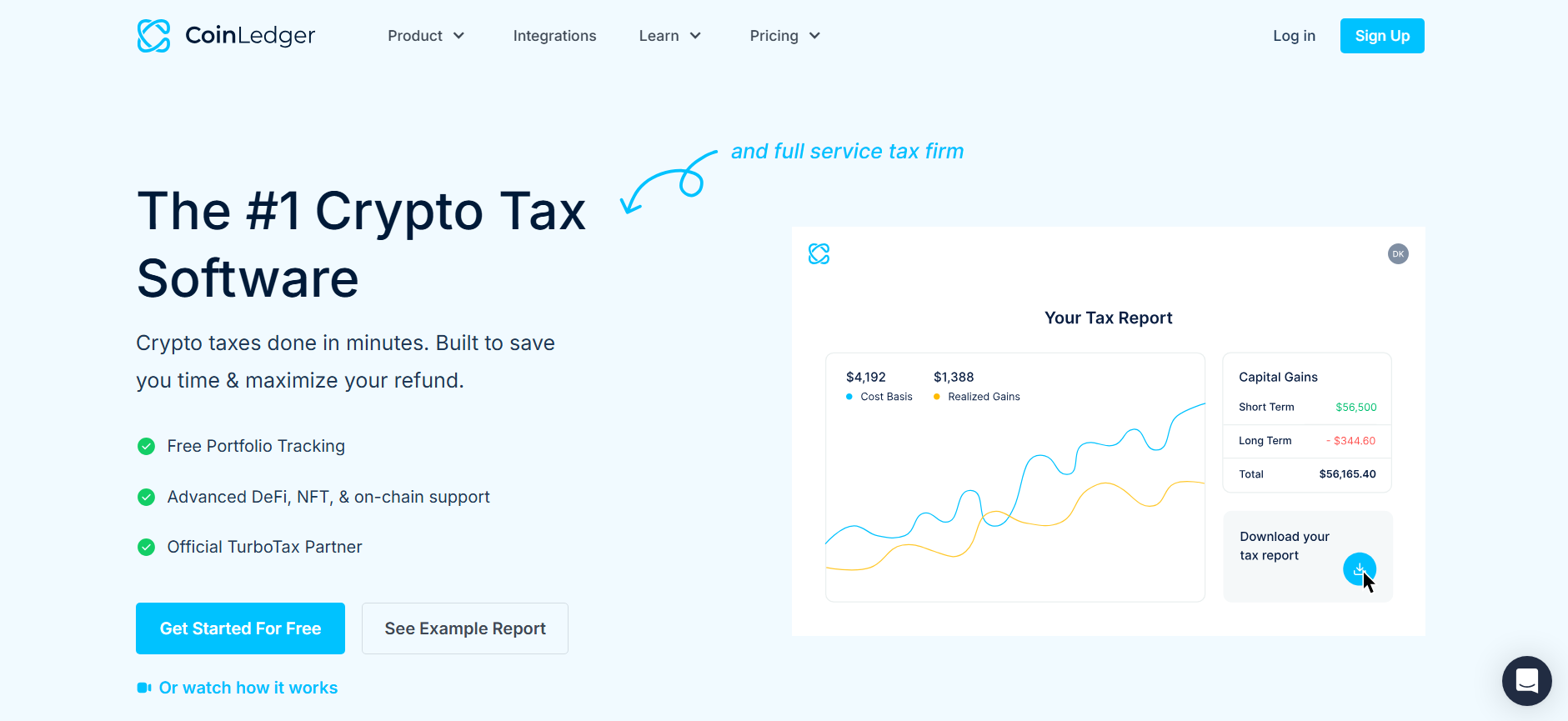
CoinLedger stands out as one of the best crypto tax software options for its seamless integration with TurboTax and its ability to simplify the tax filing process. Designed for both beginners and experienced crypto users, CoinLedger offers a user-friendly interface and robust features that make managing crypto taxes straightforward. Whether you’re dealing with DeFi, NFTs, or multiple exchanges, CoinLedger provides the tools to handle it all efficiently.
Key Features of CoinLedger
- Easy Import Options: Supports API and CSV imports from 1,000+ exchanges, wallets, and blockchains.
- TurboTax Integration: Directly integrates with TurboTax and other tax software for smooth filing.
- Comprehensive Reports: Generates IRS-compliant tax forms, including Form 8949 and international tax reports.
- Portfolio Tracking: Tracks your entire crypto portfolio, including gains, losses, and income.
- Tax-Loss Harvesting: Built-in tools to help reduce your tax bill by identifying unrealized losses.
- Support for DeFi and NFTs: Handles complex transactions like staking, lending, and NFT trades.
Pros and Cons
| Pros | Cons |
| Supports 10,000+ cryptocurrencies and all major exchanges | Pricing increases with transaction volume |
| Free portfolio tracking and tax preview | Limited free plan features |
| TurboTax and H&R Block integration | Advanced features require higher-tier plans |
| Handles DeFi, NFTs, and margin trading | No phone support |
| User-friendly interface with error reconciliation tools |
2. Koinly – Best for DeFi, Staking, and Multi-Chain
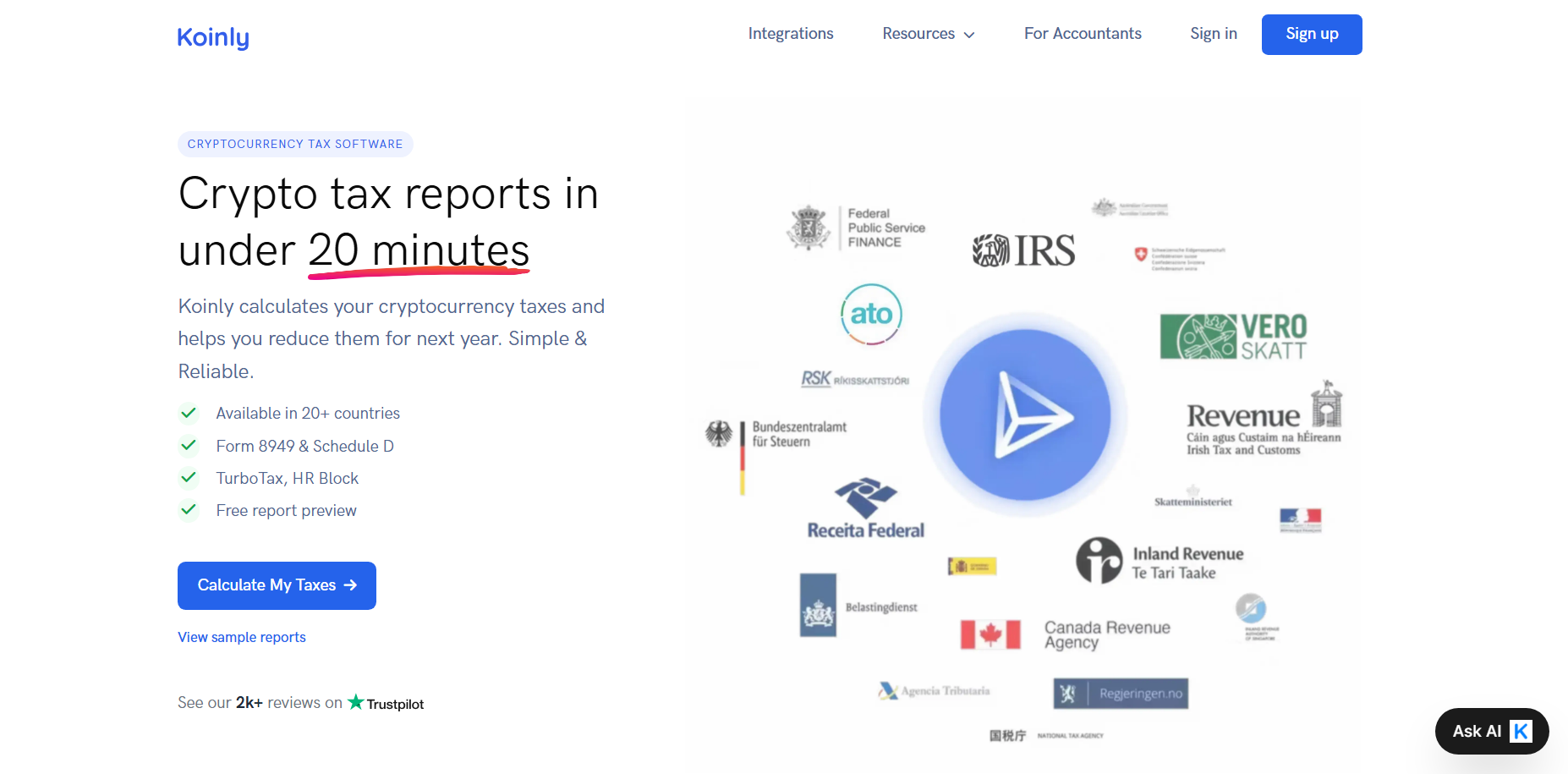
Koinly is a top choice for crypto users who need advanced portfolio tracking tools and support for DeFi, staking, and multi-chain transactions. With its ability to handle complex tax scenarios and generate accurate tax forms, Koinly simplifies the process for both casual investors and active traders. Its global compatibility and extensive integrations make it a reliable option for users across various countries.
Key Features of Koinly
- Comprehensive Tax Forms: Generates IRS Form 8949, Schedule D, and localized tax reports for over 100 countries.
- Portfolio Tracking Tools: Offers real-time tracking of your crypto portfolio, including gains, losses, and income.
- DeFi and NFT Support: Automatically tracks transactions from DeFi protocols and NFT marketplaces.
- Multi-Chain Integration: Supports 800+ exchanges and wallets, including Coinbase, Kraken, and Solana.
- Tax-Loss Harvesting: Identifies opportunities to offset gains with unrealized losses.
- Customizable Tax Settings: Allows users to choose between FIFO, LIFO, and HIFO accounting methods.
- Error Detection: Smart tools to reconcile missing data and flag duplicate transactions.
- Free Report Preview: Enables users to review their tax calculations before committing to a paid plan.
Pros and Cons
| Pros | Cons |
| Supports 800+ exchanges and wallets | Pricing increases with transaction volume |
| Generates tax forms for 100+ countries | Free plan limited to report previews |
| Advanced portfolio tracking tools for DeFi and staking | Manual reconciliation needed for obscure tokens |
| User-friendly interface with error detection | |
| Offers tax-loss harvesting for strategic tax savings |
3. CoinTracker – Best for Coinbase Users and Tax Loss Harvesting

CoinTracker is a reliable solution for users who prioritize seamless integration with Coinbase and need tools for tax loss harvesting. Known for its intuitive interface and robust features, CoinTracker simplifies the process of generating a crypto tax report while offering support for different crypto wallets and exchanges. Whether you’re a casual investor or an active trader, CoinTracker provides the tools to streamline your tax filing process.
Key Features of CoinTracker
- Crypto Tax Report Generation: Creates IRS-compliant tax forms, including Form 8949 and Schedule D, for accurate filing.
- Support for Different Crypto Wallets: Integrates with 500+ wallets and exchanges, including Coinbase, Binance, and MetaMask.
- Tax Loss Harvesting: Identifies opportunities to offset gains with unrealized losses, reducing your tax liability.
- DeFi and NFT Tracking: Tracks transactions from DeFi protocols and NFT marketplaces for comprehensive reporting.
- Portfolio Management: Offers real-time tracking of your crypto portfolio, including gains, losses, and staking rewards.
- Export Options: Compatible with TurboTax and H&R Block for easy tax filing.
- Error Reconciliation: Flags missing data and duplicate transactions for review.
- User-Friendly Interface: Simplifies the process of importing and managing transaction data.
Pros and Cons
| Pros | Cons |
| Supports 500+ wallets and exchanges | Limited free plan features |
| Generates detailed crypto tax reports | Higher-tier plans required for advanced features |
| Offers tax loss harvesting for strategic savings | Manual adjustments may be needed for obscure tokens |
| Compatible with TurboTax and H&R Block | |
| Tracks DeFi and NFT transactions |
4. Summ – Best for NFTs, DeFi, and Full Reports

Summ is a comprehensive tax software tailored for crypto enthusiasts who actively engage in NFTs and DeFi. It provides users with detailed reporting capabilities, making it easier to manage complex crypto transactions. Summ stands out for its ability to handle a wide range of sources, offering flexibility for users with diverse portfolios. Its intuitive interface ensures that even users with minimal experience can navigate the platform effectively.
Key Features of Summ
- NFT and DeFi Tracking: Monitors transactions from NFT marketplaces and DeFi protocols.
- Customizable Reports: Allows users to tailor tax reports to their specific needs.
- Global Tax Support: Offers tax solutions for multiple countries, focusing on US compliance.
- Transaction History Import: Supports data import from 3,500+ sources.
- User-Friendly Interface: Simplifies the process of managing crypto taxes.
Pros and Cons
| Pros | Cons |
| Excellent for NFT and DeFi transactions | Limited free plan features |
| Customizable tax reports | Advanced features require higher-tier plans |
| Supports a wide range of sources | No live customer support |
| Easy-to-use interface | Best experience leans toward US taxpayers |
| Global tax compatibility |
5. ZenLedger – Best for Professionals and Full-Service

ZenLedger is a powerful tax software that caters to professionals and advanced users managing intricate crypto portfolios. It offers a full-service approach, including audit support and detailed tax calculations. ZenLedger excels in providing tools for accountants and users who require in-depth reporting and compliance. Its ability to handle complex transactions makes it a go-to choice for professionals.
Key Features of ZenLedger
- Audit Support: Provides assistance for tax audits and compliance.
- Advanced Portfolio Tracking: Tracks gains, losses, and income across multiple platforms.
- DeFi and NFT Integration: Handles staking, lending, and NFT transactions seamlessly.
- Tax-Loss Harvesting Tools: Identifies opportunities to minimize tax liabilities.
- Comprehensive Reporting: Offers detailed tax forms for both US and international users.
Pros and Cons
| Pros | Cons |
| Ideal for professionals and accountants | Pricing can be high for advanced features |
| Includes audit support | Interface has more depth than some beginners need |
| Handles complex crypto transactions | Higher plans get expensive fast |
| Offers tax-loss harvesting tools | |

6. CoinTracking – Best for Portfolio Analysis and Reports

CoinTracking is a solid choice for users who want tax software with deeper portfolio insight. It does more than help with filing, since it also gives you a close look at performance, trends, and transaction history over time. This makes it useful for active traders who care about reporting and ongoing portfolio analysis. If you like detailed records and want more control over your data, CoinTracking has a lot to offer.
Key Features of CoinTracking
- Portfolio Analytics: Offers detailed insights into portfolio performance and trends.
- Customizable Tax Calculations: Supports various accounting methods like FIFO and LIFO.
- API Integration: Seamlessly imports data from 300+ APIs.
- Historical Data Support: Tracks and analyzes past transactions for accurate reporting.
- Advanced Reporting Tools: Provides tailored reports for different tax jurisdictions.
Pros and Cons
| Pros | Cons |
| Advanced portfolio analytics | Higher-tier plans required for advanced tools |
| Supports multiple accounting methods | Limited free plan |
| Integrates with numerous APIs | No live chat support |
| Tracks historical data for accurate reporting | Dashboard may feel busy at first |
| User-friendly dashboard |
7. Awaken – Best for DeFi Focus

Awaken is a specialized tax software for users deeply involved in DeFi transactions. It simplifies the complexities of managing decentralized finance activities by offering tailored tools and reports. Awaken’s focus on blockchain integration ensures accurate tracking of crypto transactions across multiple platforms.
Key Features of Awaken
- DeFi-Specific Tools: Tracks staking, lending, and liquidity pool transactions.
- Blockchain Integration: Supports multiple blockchains for seamless data import.
- Customizable Pricing Plans: Offers tiered plans to suit different user needs.
- Crypto Tax Calculator: Provides accurate tax calculations for DeFi activities.
- Global Tax Solutions: Supports users across various countries.
Pros and Cons
| Pros | Cons |
| Tailored for DeFi users | Limited free trial |
| Supports multiple blockchains | Advanced features require higher-tier plans |
| Offers a crypto tax calculator | New users may need time to review imported data |
| Flexible pricing options | Fewer mainstream brand signals than older competitors |
| Simplifies complex DeFi transactions |
8. Coinpanda – Best for NFTs

Coinpanda is a smart option for users who want strong NFT support along with broad tax coverage. It also appeals to international users because it supports tax reporting for many countries. The platform balances tax prep with portfolio tracking, which gives it value beyond tax season alone. If you buy, sell, mint, or trade NFTs across several platforms, Coinpanda is one of the more practical tools to consider.
Key Features of Coinpanda
- NFT Tracking: Monitors transactions from NFT marketplaces.
- Global Tax Compliance: Offers tax solutions for 65+ countries.
- Portfolio Management: Tracks gains, losses, and staking rewards.
- DeFi Integration: Supports transactions from DeFi protocols.
- Tax-Loss Harvesting: Identifies opportunities to reduce tax liabilities.
Pros and Cons
| Pros | Cons |
| Excellent for NFT transactions | Limited free plan features |
| Supports global tax compliance | Higher-tier plans required for advanced tools |
| Tracks staking rewards and DeFi transactions | No live chat support |
| User-friendly interface | |
| Offers tax-loss harvesting tools |
9. TokenTax – Best for Pro Services
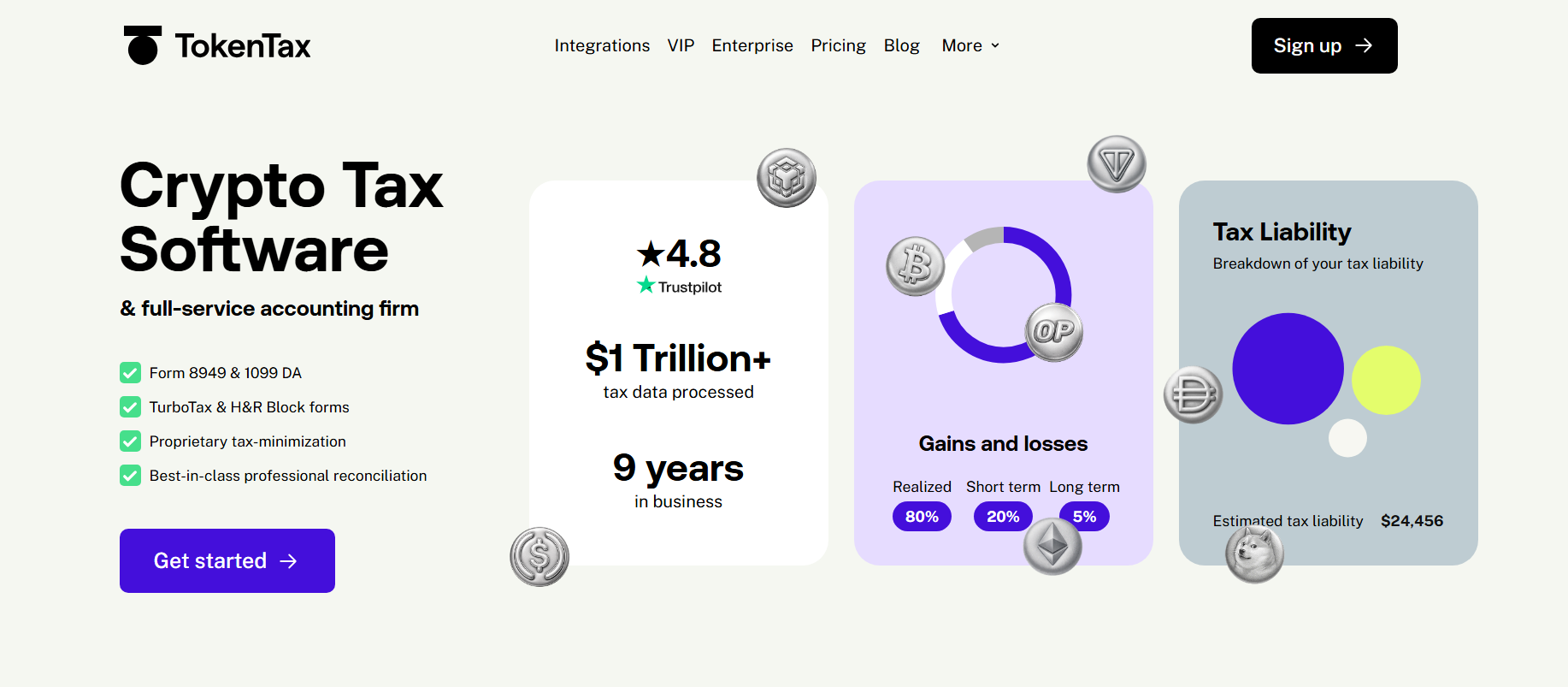
TokenTax is a premium tax software that combines professional services with advanced features. It is ideal for high-volume traders and businesses requiring detailed reporting and compliance.
Key Features of TokenTax
- Professional Tax Services: Includes audit support and custom reporting.
- Advanced Reporting Tools: Provides tailored reports for businesses and individuals.
- Portfolio Tracking: Monitors gains, losses, and income across platforms.
- Tax-Loss Harvesting: Identifies opportunities to minimize tax liabilities.
- Customizable Plans: Offers flexible pricing for different user needs.
Pros and Cons
| Pros | Cons |
| Ideal for high-volume traders | Expensive for advanced plans |
| Includes professional tax services | Limited free plan |
| Offers advanced reporting tools | No phone support |
| Flexible pricing options | |
| Supports audit preparation |
10. Bitcoin.Tax – Best for Simple Filings
Bitcoin.Tax is a straightforward option for portfolio tracking for people who want a simple way to handle crypto taxes. It focuses on the essentials, which makes it a better fit for casual investors and users with less complicated histories. The platform has been around for years, and that long track record gives some users added confidence.
Key Features of Bitcoin.Tax
- Simple Tax Filing: Provides basic tools for filing crypto taxes.
- Portfolio Tracking: Monitors gains and losses across platforms.
- Customizable Plans: Offers affordable pricing for different user needs.
- User-Friendly Interface: Simplifies the tax filing process.
- Global Tax Support: Provides solutions for international users.
Pros and Cons
| Pros | Cons |
| Easy-to-use platform | Limited advanced features |
| Affordable pricing plans | No support for complex transactions |
| Tracks gains and losses | Limited free plan |
| Supports global tax solutions | Less polished than newer platforms |
| Simplifies tax filing for beginners |
How We Tested & Ranked These Tools
To provide a thorough evaluation of the best crypto tax software, we applied a detailed methodology. Each tool was assessed for its ability to handle complex crypto transactions, generate accurate crypto tax reports, and offer features that simplify tax filing. Additionally, we considered the importance of choosing a crypto exchange with built-in tax reporting support, as this can significantly streamline the process for users. Here’s how we ranked these tools:
Methodology
- Reconciliation Strength: We evaluated how effectively each software reconciles transaction data from multiple exchanges, wallets, and blockchains. Tools that excelled in handling diverse data sources scored higher.
- DeFi Accuracy: With the rise of decentralized finance, we tested how accurately each tool tracks and reports DeFi transactions, including staking, lending, and liquidity pools.
- 1099-DA Readiness: We checked whether the software is equipped to generate IRS-compliant forms, such as 1099-DA, ensuring users can meet tax obligations with ease.
- Built-In Tax Reporting Support: Tools that integrate seamlessly with crypto exchanges offering built-in tax reporting support were given additional weight, as this feature simplifies the tax filing process for users.
- Pricing: Affordability and value for money were key considerations. We compared pricing tiers to identify tools that offer robust features at competitive rates.
- Ease of Use: User experience was a critical factor. We assessed the intuitiveness of the interface, the simplicity of importing data, and the overall usability of the platform.
Factors to Consider When Choosing Crypto Tax Software
Picking the right tool comes down to how well the software fits your crypto habits, how much work it saves you, and how confidently it helps you handle your records. Here are factors to consider:
1. Compatibility with Your Exchanges and Wallets
Start with compatibility. This is one of the first things we check because even the best-looking software loses value if it cannot connect to the exchanges and wallets you already use. A strong platform should support major exchanges, popular wallets, and a wide range of blockchains so your data flows in with fewer gaps.

2. Ease of Use
Ease of use matters more than many people expect. Crypto taxes already come with enough friction, so your software should make the job feel simpler from the start. We look for platforms with a clear dashboard, a smooth setup process, and reports that are easy to read without digging through layers of menus.
3. Pricing Plans
Pricing deserves a close look because the cheapest option is not always the best value. Some tools start low, then increase sharply once your crypto transactions grow or you need access to final tax forms. Others include more useful features upfront, which can make them a better deal over time.
4. Transaction Tracking and Reporting Features
Good transaction tracking is the backbone of solid crypto tax software. The platform should pull in your history, sort your crypto transactions correctly, and give you reports that feel complete and easy to review. This includes gains, losses, income, transfers, and activity tied to staking, NFTs, or DeFi if those apply to you.
5. Integration with Traditional Tax Filing Software
Integration with traditional tax filing software can make the final step much easier. If your crypto tax software connects with tools like TurboTax or similar filing platforms, you spend less time moving data around by hand. That reduces friction and helps keep your records consistent from start to finish.
Everything You Need to Know About Crypto Taxes
With evolving regulations and the increasing need for accurate reporting,you require the right tools. Let’s break down the essentials of crypto taxes.
Do I Need to Report Crypto on My Taxes?
Yes, you must report crypto on your taxes if you’ve sold, traded, or earned cryptocurrency. The IRS treats crypto as property, meaning any gains, losses, or income from crypto transactions are taxable events.
How Does Crypto Tax Software Work?
Crypto tax software automates the process of calculating taxes by importing transaction data from exchanges, wallets, and blockchains. It generates accurate tax forms, such as Form 8949, and provides insights into gains, losses, and income.
Do I Need Crypto Tax Software?
If you have multiple transactions, use various exchanges, or your portfolio is heavy on decentralized finance (DeFi), crypto tax software is highly recommended. It simplifies tax filing, reduces errors, and ensures compliance with tax regulations.
What Changed for Crypto Taxes in 2026?
In 2026, stricter reporting requirements were introduced, including mandatory 1099-DA forms for crypto exchanges. Additionally, increased scrutiny on DeFi and NFT transactions means accurate reporting is more important than ever.
Free Crypto Tax Software Options: Are They Worth It?
- Free crypto tax software can be a good starting point for beginners or those with minimal transactions when trading digital assets.
- These tools often provide basic features like transaction tracking and limited tax form generation.
- Advanced features, such as DeFi and NFT support, are typically unavailable in free plans.
- Free options may lack robust reconciliation tools for complex portfolios or multiple exchanges.
- While useful for simple needs, paid software is recommended for accurate reporting and compliance with tax regulations.
Conclusion
The right crypto tax software depends on the complexity of your transactions and the tools required for accurate reporting. Free options work for basic needs, but advanced features such as DeFi tracking and tax-loss harvesting often require paid plans. Reliable software ensures compliance with evolving regulations and simplifies the tax filing process. Select a solution that aligns with your trading activity and financial objectives.
FAQs
Crypto tax software is a tool that automates the process of calculating taxes on cryptocurrency transactions, generating accurate tax forms, and ensuring compliance with tax regulations.
The best crypto tax software for 2026 depends on your needs, but top options include tools with advanced features like DeFi tracking, tax-loss harvesting, and 1099-DA readiness.
Some crypto tax software offers free plans, but these are typically limited to basic features. Advanced tools and comprehensive reporting usually require a paid subscription.
Crypto tax software like CoinLedger, ZenLedger, and TokenTax integrates seamlessly with TurboTax for easy tax filing.
You can legally reduce the taxes you owe on crypto by using strategies like tax-loss harvesting and ensuring accurate reporting of all transactions.