
Nasdaq has received SEC approval to launch a pilot program for trading tokenized securities, marking a significant move for Wall Street into blockchain infrastructure.
However, the process remains tied to existing centralized clearing systems. The pilot will enable Nasdaq to trade tokenized versions of major stocks and select index ETFs, acknowledging “Real World Assets” (RWAs) at a federal level.
BREAKING: SEC has approved NASDAQ’S rule change to enable trading of tokenized securities.
In a historic regulatory shift, the SEC has cleared Nasdaq to trade stocks and ETFs as digital tokens, finally merging the speed of blockchain with the world's most powerful equity market.… pic.twitter.com/hp9JrQ3Iag
— Bull Theory (@BullTheoryio) March 18, 2026
While embracing new technology, the model maintains traditional rules and prioritizes safety over decentralization. This approval comes as crypto markets stabilize, with traditional finance firms racing to modernize legacy settlement systems.
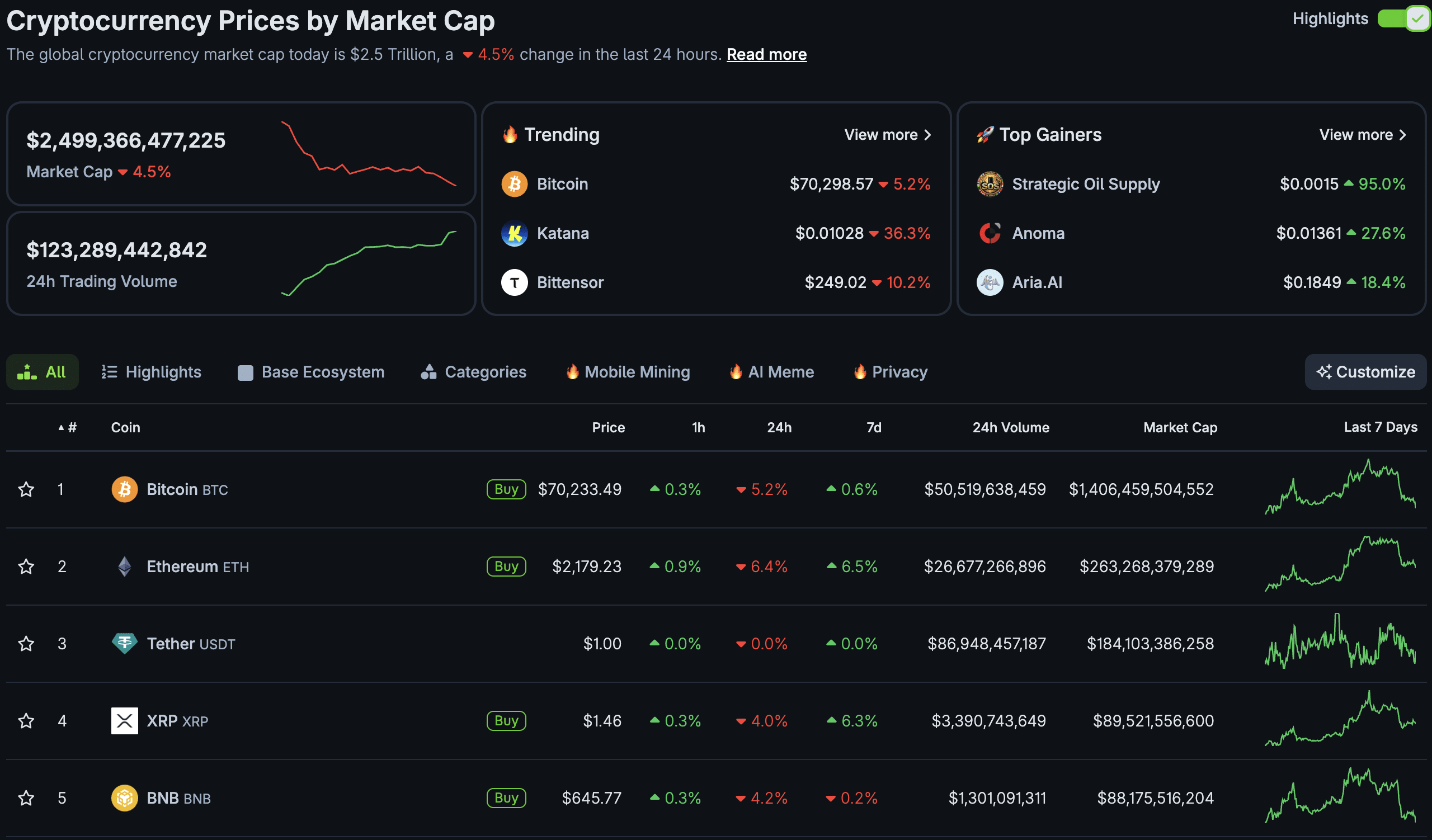
This news comes as the broader crypto market dropped -4.5% overnight, losing the crucial $2.5 trillion level, with Bitcoin flirting dangerously close to $70,000 after a -5.2% slump over the past 24 hours.
The Nasdaq Pilot Program: How Wall Street Goes On-Chain
To grasp the significance of this pilot, it’s important to understand the stock market’s “plumbing.” Currently, buying a stock feels instant, but it takes one to two days for money and shares to exchange, creating a delay that ties up billions daily.
Tokenization transforms stocks into digital tokens on a blockchain. In Nasdaq’s pilot, this involves creating a “digital twin” of shares that retain the same rights, ticker symbols, and values as traditional stocks.
The process is mostly invisible to traders but transformative for brokers. When an order is marked for “tokenized settlement,” Nasdaq relays this to the Depository Trust & Clearing Corporation (DTC). If the buyer’s wallet and technology match, the trade settles on the blockchain.
Importantly, if an issue arises, the trade defaults to the traditional method, providing a hybrid system that combines blockchain and traditional safety measures.
DISCOVER: See how institutional giants like BlackRock are bridging TradFi and crypto with ETFs here.
The Immediate Shift: Efficiency Meets Access
This pilot targets the biggest friction point in finance: inefficiency. By tokenizing shares, Nasdaq is laying the groundwork for what could eventually be 24/7 trading and instant settlement.
While the pilot is initially limited to standard market hours and clearinghouse schedules, the technology enables a future in which capital moves as fast as information.
For the broader market, this is about modernizing the pipes. We have already seen institutions adapt their internal systems to handle crypto-adjacent products, such as when 21Shares updated reference pricing mechanisms for their ETPs to better align with market realities. Nasdaq is now applying similar modernization to the actual trading rails of standard equities.
Additionally, this move signals a deeper integration between crypto-native firms and the equities market. For example, Abra Financial Holdings, a major digital asset wealth platform, recently announced it would go public on Nasdaq via a SPAC merger.
The convergence works both ways: crypto companies are entering the stock market, and the stock market is adopting crypto technology.
@SECGov Approves @Nasdaq Rule Change for Tokenized Securities
The SEC has approved Nasdaq’s proposal (SR-NASDAQ-2025-072), enabling tokenized stocks and ETFs within the existing U.S. market structure.
Key Structure
• Traditional shares remain unchanged
• Tokenized… pic.twitter.com/K1zQBwWjsp— kimcĦi.ℏ/acc (@HederaKimchi) March 18, 2026
The Limitations: Centralized Control vs. DeFi
On one side, proponents argue that this is the necessary bridge to bring trillions of dollars on-chain. On the other side, crypto purists will point out that the SEC’s approval explicitly restricts this activity to the DTC’s closed loop. This undermines the primary value proposition of public blockchains: openness and permissionlessness.
Nasdaq Executive Vice President Tal Cohen stated explicitly that issuers “should always remain at the center” of the ecosystem. This clearly signals that the system is designed to protect corporate control rather than dismantle it. You will not be self-custodying your Tesla stock in a MetaMask wallet under this pilot.
There is also regulatory pressure shaping this rollout. The SEC is testing the waters here, likely influenced by the broader legislative push for clarity.
As Congress faces deadlines on bills like the CLARITY Act, regulators are keen to show they can modernize market structures without new laws, potentially to retain jurisdiction over tokenized assets.
Follow 99Bitcoins on X (Twitter) For the Latest Market Updates and Subscribe on YouTube For Daily Expert Market Analysis.
The post Nasdaq Wins SEC Approval for Tokenized Securities: Wall Street Goes On-Chain appeared first on 99Bitcoins.