
Key Takeaways
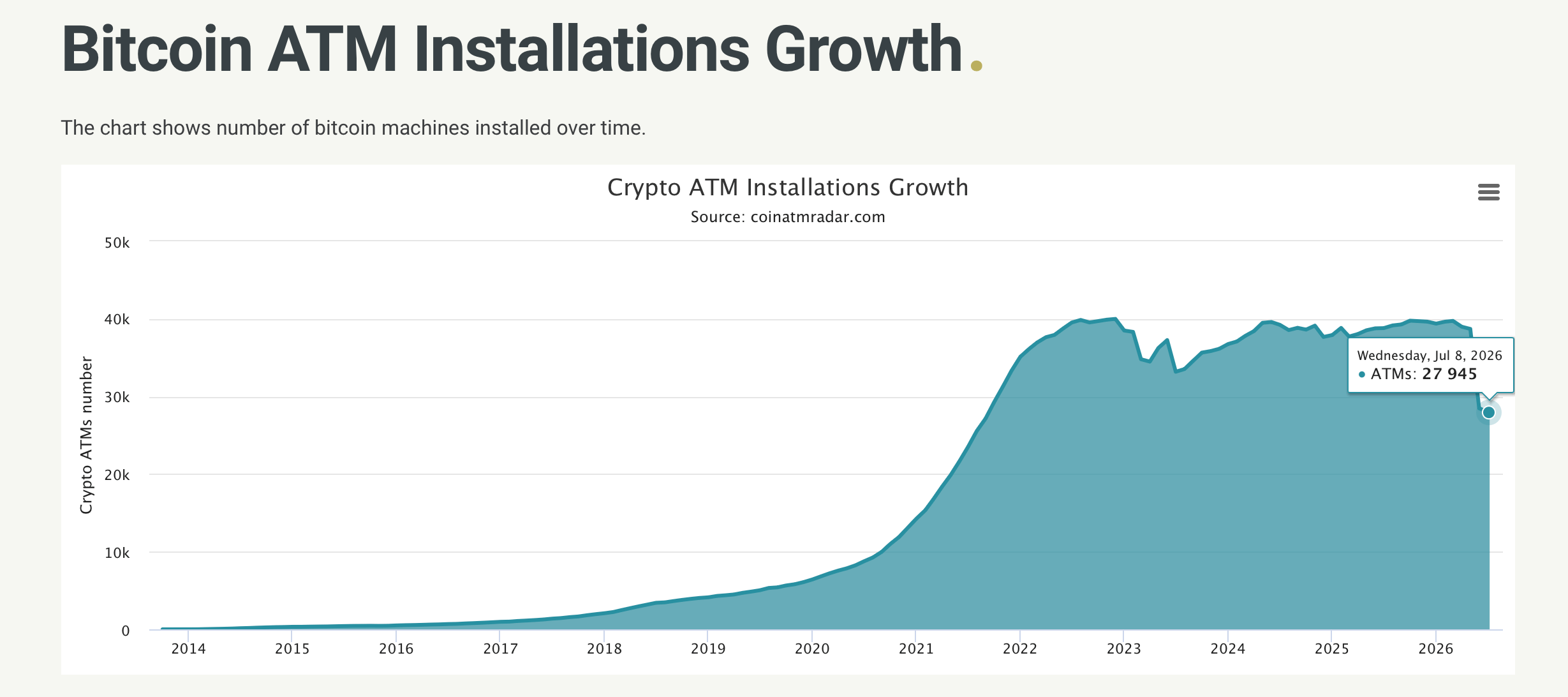
- U.S. crypto ATMs fell to 27,945 machines, down 10,763 from a peak of 38,708.
- Bitcoin Depot filed Chapter 11 on May 18, 2026, pulling 9,700 machines offline.
- Vermont’s Act 142 took effect July 1, 2026, joining bans in Indiana, Tennessee and Minnesota.
Bitcoin ATM installations growth data from coinatmradar.com shows steady expansion from 2020 through 2022, when operators added more than 2,000 machines a month at the high point. That growth curve has now reversed massively. Coinatmradar.com stats show that the network stood at 27,945 machines as of July 8, 2026, the lowest count in years. The last time the tally fell to this level was during the period spanning September and October 2021.
Four states have banned crypto ATMs outright. Indiana signed HB 1116 in March 2026, becoming the first state to prohibit the machines entirely. Tennessee followed with HB 2505, signed April 13 and effective July 1, making ownership or operation a Class A misdemeanor. Around 185 machines were running in Tennessee before the ban took hold.
Minnesota signed SF 3868 on May 5, with the operations ban effective Aug. 1 and full removal required by 2027. Vermont closed the loop with Act 142, signed June 16 and effective July 1, which permanently bars operators from locating or running kiosks in the state and voids any existing registrations.
No other state has enacted a full ban as of early July. Delaware and New Jersey both have prohibition bills sitting in committee, and neither has come up for a final vote. Local governments have moved faster than some state legislatures. Spokane, Washington, along with Stillwater and St. Paul in Minnesota, already restricts or bars the machines at the city level, separate from whatever their state legislatures decide.
Bitcoin Depot’s Exit
Bitcoin Depot, formerly one of the largest crypto ATM operators in the country with roughly 9,700 machines, filed for Chapter 11 bankruptcy on May 18. The filing pointed to stringent compliance obligations, outright state bans, and mounting litigation as reasons the business model no longer worked. The company began winding down its network as part of the case, pulling thousands of machines offline in a matter of weeks.

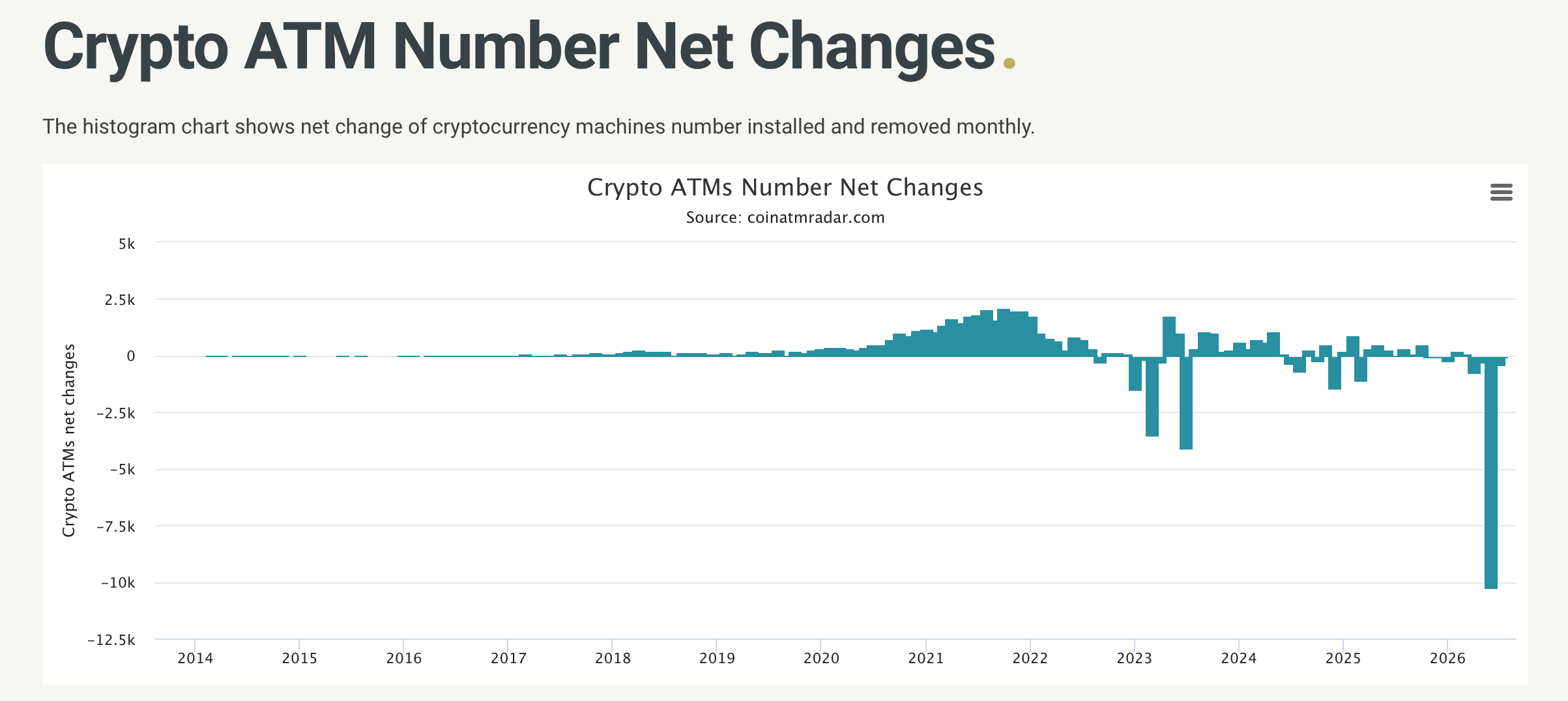
Crypto ATM number net changes statistics from coinatmradar.com show the impact in stark terms. Monthly figures moved from strong positive territory in 2020 and 2021 to increasingly volatile, then negative, readings by 2023 through 2025. The most recent period shows a single monthly net change of roughly negative 10,230 machines for June 1, 2026, a swing with no precedent in coinatmradar.com’s data set.
That single bar tells a different story from the running total. A cumulative chart makes a decline look gradual even when it isn’t. The monthly figures show years of steady expansion giving way to a short, sharp collapse once bans and bankruptcy hit at nearly the same time. Operators who built their business around thin per-transaction fees had little room left once compliance costs rose in state after state.
Why Regulators Moved
State lawmakers built their case around fraud. The FBI reportedly logged thousands of complaints tied to crypto ATMs in 2025, with losses running into the hundreds of millions of dollars. Romance scams and investment fraud schemes often push victims, disproportionately seniors, toward a nearby kiosk because the transactions clear fast and cannot be reversed.
States that stopped short of a full ban have leaned on transaction caps, mandatory fraud warnings, money transmitter licensing, and refund rules for victims who file a police report. California, Arizona, Georgia, Virginia, and Arkansas have all added rules along these lines since 2025. Delaware and New Jersey do have ban bills moving through committee, but have not enacted them as of early July.
What This Means for Bitcoiners
The physical on-ramp that crypto ATMs once provided is shrinking fast in states that have decided the machines create more harm than access. For traders and investors who rely on exchanges, brokerages, or peer-to-peer platforms, the shift changes little day to day. For the segment of the public that used kiosks as a first entry point into bitcoin, options are narrowing to app-based exchanges and bank transfers, depending on the state you live in.
Investors watching Bitcoin Depot’s bankruptcy case have another angle to track. The company’s remaining machines, contracts, and retail partnerships are assets that could be sold off or absorbed by a competitor still operating in less restrictive states. Any sale would reset the ownership map for the machines that survive the current wave of removals.
Coinatmradar.com data indicates the U.S. accounted for the vast majority of global crypto ATM losses in the first half of 2026, which highlights how concentrated this contraction has been in American state legislatures rather than a broader industry pullback overseas.
The remaining 27,945 machines are spread across states with lighter rules, and new installations continue in some of them, though those additions are not close to offsetting the losses tied to bans and Bitcoin Depot’s exit. Whether the other states follow Indiana, Tennessee, Minnesota, and Vermont depends largely on how fraud numbers trend through the rest of 2026 and on what happens to Bitcoin Depot’s assets during its bankruptcy proceeding.
On March 29, 2026, the United States had 30,247 crypto ATM machines in operation, and today, that number stands at 20,005, according to coinatmradar.com’s geo distribution data.