Key Takeaways
- Santos must pay $35,069.98 and cannot trade on registered markets for three years.
- He opened the account Feb. 11 and traded only the market on his own attendance.
- The DOJ has denied investigating Santos since June 3, contradicting earlier reports.
Santos Switched Sides as Travel Plans Collapsed
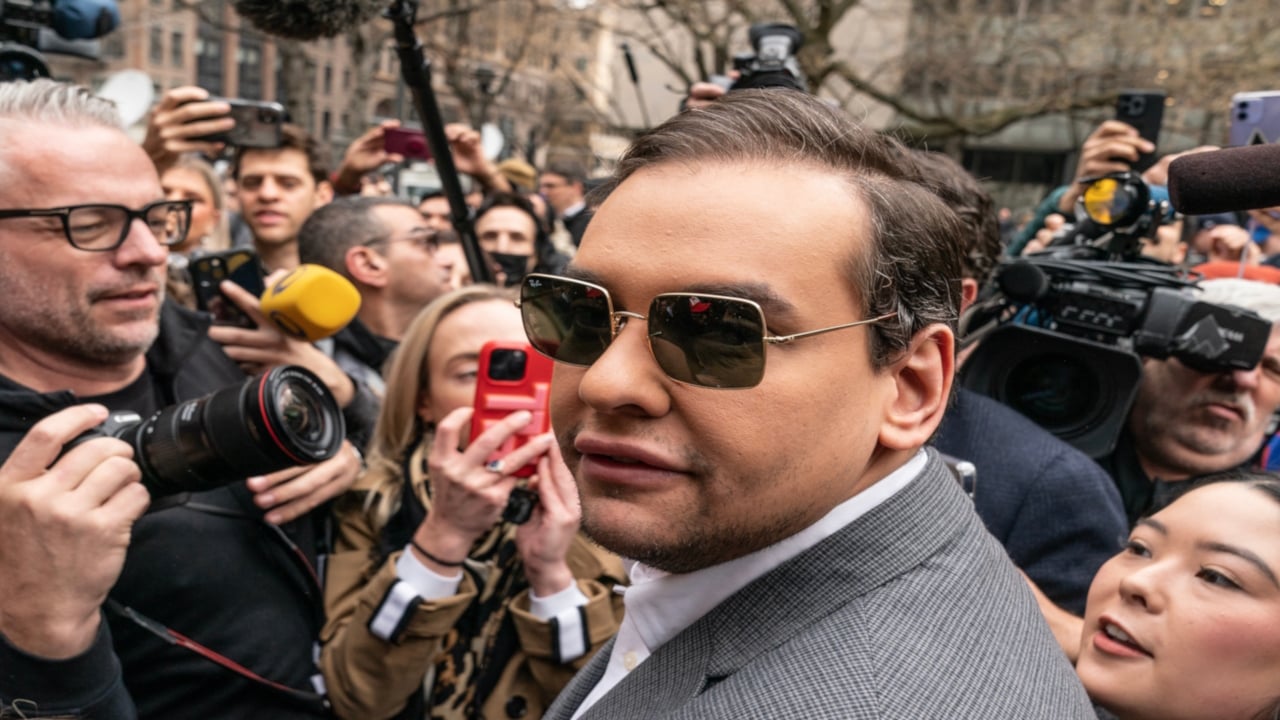
Former U.S. Rep. George Santos settled the Commodity Futures Trading Commission findings that he manipulated a Kalshi event contract by making misleading public statements while trading on whether he would attend President Donald Trump’s State of the Union address. Under the July 31 order, Santos must disgorge $17,569.98, pay a $17,500 civil penalty, accept a cease-and-desist order, and refrain from trading on any CFTC-registered entity for three years.
Santos was expelled from Congress in December 2023 and pleaded guilty to wire fraud and aggravated identity theft, drawing a sentence of more than seven years. He served roughly four months before Trump commuted it in October 2025, releasing him with no further fines, restitution or supervised release. Four months after that, he opened a trading account.
The order closes the CFTC investigation into Santos publicly promoting plans to attend before taking a profitable position against his appearance. The commission’s trading records now reveal a wider sequence: Santos first made money betting that he would attend, then reversed direction and accumulated no contracts.
Kalshi had listed the market on his attendance roughly three weeks before he opened his account on Feb. 11. He funded it with about $7,000 and traded exclusively in that contract. Between Feb. 12 and Feb. 22, he accumulated 30,874 Yes contracts worth $6,695.94. After he asked followers on X whether he should wear a serious or bedazzled suit to the address, the Yes price rose from $0.15 to $0.70. Santos then sold the entire position for a $3,448.43 profit and withdrew $10,146.07 through a recently created Venmo account.
His airline notified him later that day that his flight to Washington had been canceled. Santos bought a train ticket that night and continued discussing the trip publicly. On Feb. 23, he posted a video saying he would attend from the House gallery, sending the Yes price back from $0.40 to $0.70. About 40 minutes later, he began buying contracts that would pay if he did not attend.
Santos ultimately accumulated 23,855 No contracts worth $8,650.66. His train was canceled about an hour after he began building the position, but when another X user asked whether he was no longer attending, Santos replied that he was. At that point, both his flight and train had been canceled, information the CFTC said he did not disclose publicly.
On the day of the address, internet records showed Santos accessing Kalshi from his residence. He later posted that watching the speech on an airport television had not been his plan. The Yes price fell from $0.73 to $0.02, increasing the value of his No position, which he exited early Feb. 25 for a reported $14,390.57 profit.
The commission found that Santos made misleading statements and material omissions to influence the contract price for his benefit. It charged the conduct under the Commodity Exchange Act’s anti-manipulation provision and Regulation 180.1 rather than treating the case as conventional insider trading based on misappropriated confidential information – the approach federal prosecutors took against Army Master Sgt. Gannon Ken Van Dyke, who turned $33,000 into more than $404,000 on Polymarket ahead of the Maduro raid. The order also classified the State of the Union attendance contract as a swap subject to CFTC enforcement.
Santos accepted the settlement without admitting the order’s findings or conclusions. His attorney, Joseph W. Murray, said the former lawmaker originally expected to attend and changed his position because winter weather disrupted his travel, denying any intent to deceive traders or manipulate the market, and said Santos “chose a prompt, practical resolution rather than protracted, costly litigation.”
Kalshi said it detected the activity, froze the account, and supplied the evidence used by the CFTC. CEO Tarek Mansour told Axios last month that Santos “tried to manipulate one of the markets and within seconds it was flagged by our system,” adding that “within minutes we had like a hundred whistleblower complaints.” The exchange plans separate enforcement for exchange-rule violations and said it may reimburse affected traders if it recovers money from Santos, which would follow the surveillance approach it built through its Sportradar integrity partnership.
NPR reported in June that Kalshi had referred the conduct to both the CFTC and the Justice Department and that both had opened investigations. However, a DOJ official told the Washington Examiner on June 3 that no such case existed, a denial the department has maintained since. That leaves the CFTC settlement as the only confirmed federal action arising from the trades.