Key Takeaways
- Kimsuky tested 3 local AI platforms as North Korea expands its cyber capabilities.
- Genians says Kimsuky has used AI-generated phishing documents since the start of 2026.
- Kimsuky has not trained its own AI models, but Genians warns its capabilities are advancing.
In an analysis published Monday, Genians Security Center stated that months of tracking infrastructure associated with Kimsuky uncovered evidence of local large language models, AI development frameworks, speech recognition tools and generative AI-created documents. Researchers assess the group as operating under North Korea’s Reconnaissance General Bureau.
Kimsuky Builds Its Own Private AI Lab
The findings go beyond evidence that hackers occasionally asked a chatbot for help. Researchers discovered traces of three local AI platforms, Ollama, GPT4All and Msty, installed in infrastructure linked to the threat actor. Local models can run directly on a computer or server instead of sending conversations to an outside provider, giving an operator greater privacy.
Genians also found evidence that GPT4All’s LocalDocs feature had been configured. The feature uses retrieval-augmented generation, or RAG, which allows an AI system to search a collection of documents before answering questions. For hackers, researchers warned, that capability could eventually make large piles of stolen documents easier to search and analyze. Genians’ report lands on the heels of the Coldcard exploit and Bybit’s escalating legal battle against North Korea.
The group appears to be exploring automation as well. Investigators found AI development packages including Microsoft Semantic Kernel, Microsoft Agents AI and LLaMaSharp, alongside components for connecting programs with OpenAI and Azure OpenAI services. Researchers said the combination points toward development of specialized AI-powered tools rather than casual experimentation.
AI Makes Kimsuky’s Phishing Lures Harder to Spot
Some of that experimentation may already be influencing attacks. Since 2026, researchers have observed Kimsuky using documents assessed to have been created with generative AI as decoys in spear phishing campaigns targeting subjects including virtual assets, financial investment and game development.
That matters because polished AI-generated documents can strip away some of the warning signs users once relied on to recognize phishing. Awkward translations, spelling mistakes and sloppy formatting become less useful clues when generative AI can quickly produce professional-looking business materials.
The underlying attack, however, remains familiar. Victims receive ZIP archives containing malicious Windows shortcut, or LNK, files disguised as legitimate documents. Opening one can trigger hidden PowerShell commands while displaying a real-looking PDF, leaving the victim unaware that malicious activity is running in the background.
Kimsuky has also abused Git repositories as command-and-control infrastructure. Genians found malicious AsyncRAT payloads encrypted and disguised as image files with names such as “apple.png,” “fox.png” and “wolf.png.” AsyncRAT is remote-access malware that can give an attacker control over a compromised machine.
Researchers Find North Korean Clues in the Logs
Investigators also uncovered evidence connecting the activity to North Korean operators. Logs contained the system manufacturer name “Arirang,” a brand associated with North Korean tablets and smartphones, along with Korean-language materials and linguistic patterns researchers identified as characteristic of North Korean usage.
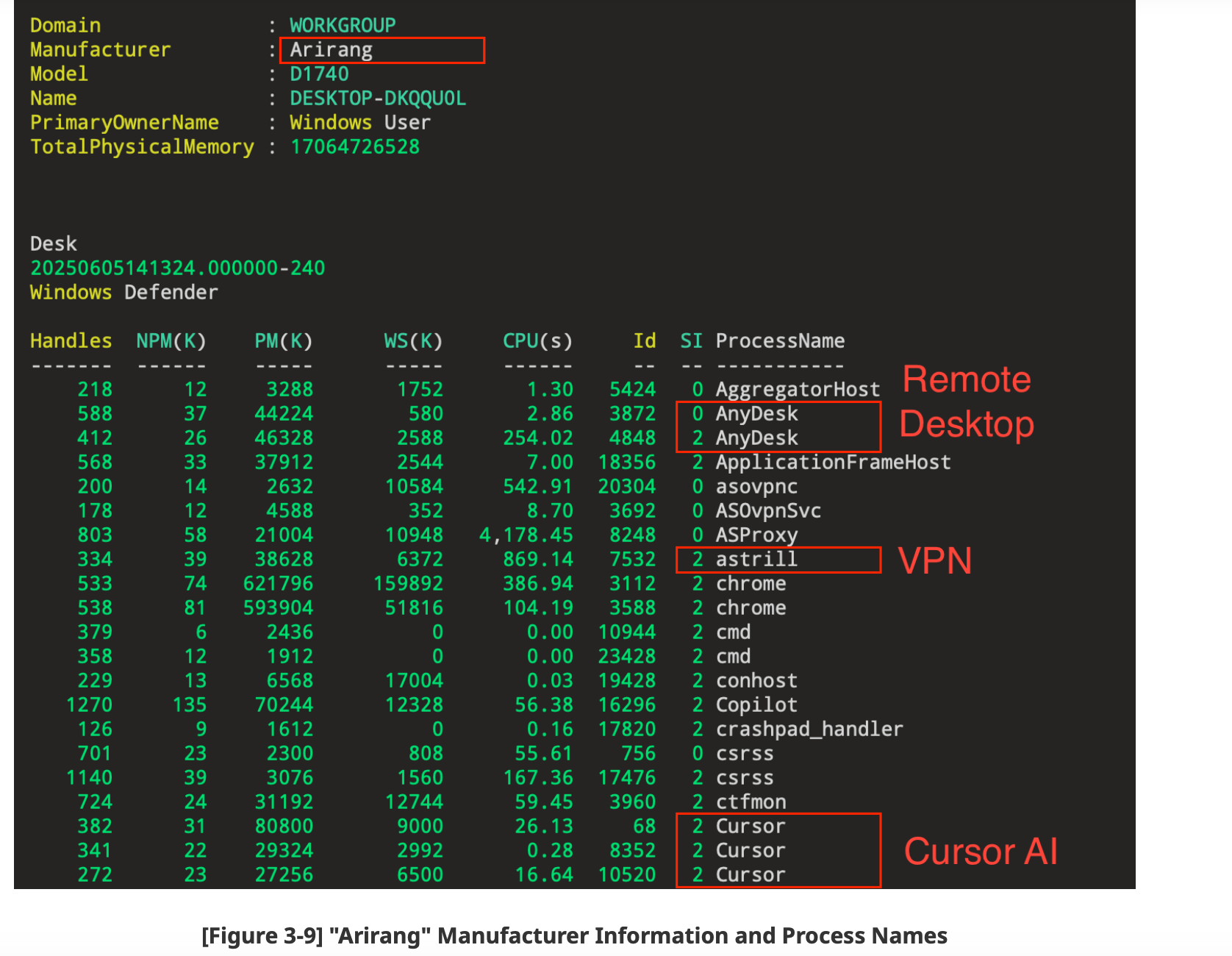
In another case, logs showed a Korean-language question about disabling Microsoft Defender’s reporting feature being translated into English through Google Translate and then submitted to ChatGPT. Researchers also found searches related to virtual assets, including a query asking where users of bitcoin could be found.
The report stops short of saying Kimsuky has built its own AI models. Researchers found no large training datasets or evidence of independently trained models. Instead, they describe a group still learning how to integrate existing AI systems into malware development, data analysis and broader attack operations.
That distinction may not remain reassuring for long. Genians warned that combining RAG with stolen documents, speech-to-text tools with intercepted recordings and AI agents with Kimsuky’s existing malware development environment could reduce the human work required after a breach. For defenders, the next battle may increasingly center on detecting what malware does rather than judging whether the email that delivered it looks suspicious.
Across the crypto ecosystem, hacks and exploits are increasingly drawing suspicions that AI helped attackers pull them off.