Key Takeaways
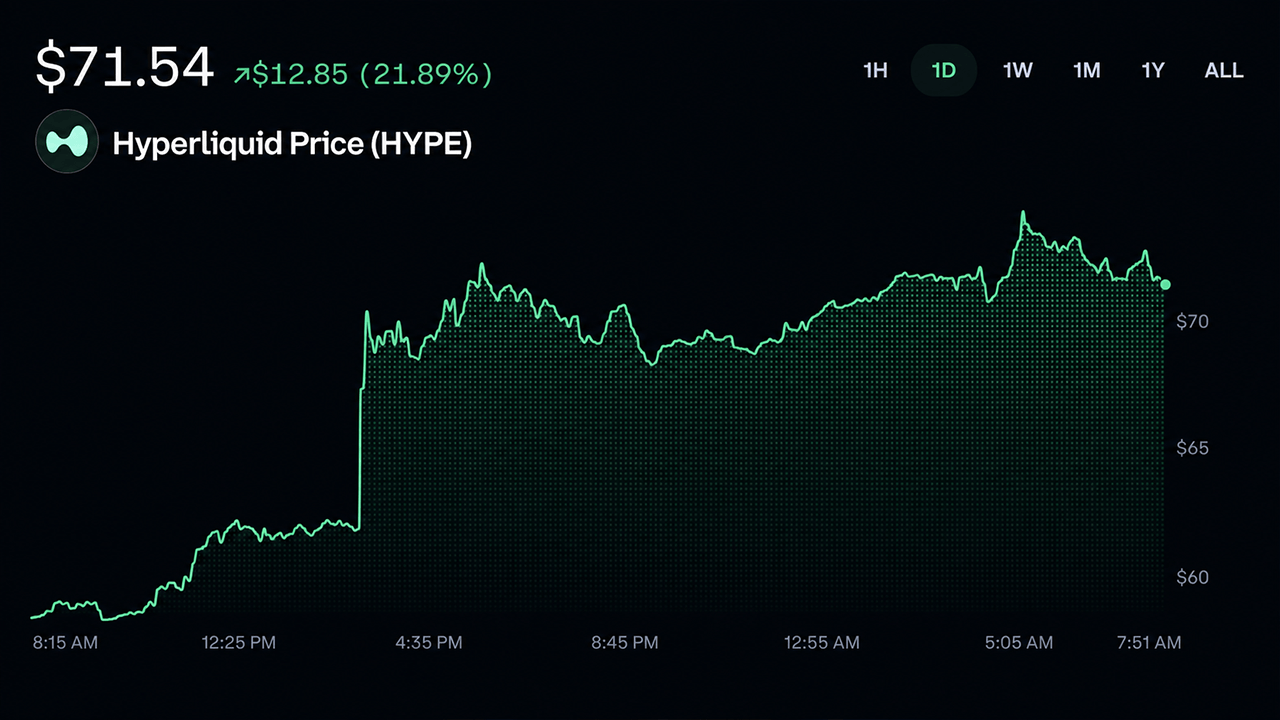
- HYPE gained roughly 20%-25% after Trump discussed Hyperliquid on Aug. 19.
- Hyperliquid volume topped $1.3 billion as HYPE approached record territory.
- CFTC Chair Michael Selig faces the next test: turning Trump’s signal into a legal U.S. path.
Trump Drops Hyperliquid Into Washington’s Spotlight
Trump made the comments on Aug. 19 during a White House meeting with cryptocurrency, technology, and finance executives, specifically pointing to Commodity Futures Trading Commission Chairman Michael Selig’s reported work on Hyperliquid.
“I understand that Mike is also working to bring Hyperliquid into the United States in a fully compliant and legal fashion. Working very hard on that,” Trump remarked, referring to Selig. The room included Coinbase CEO Brian Armstrong, Ripple CEO Brad Garlinghouse, Robinhood CEO Vlad Tenev, Securities and Exchange Commission (SEC) Chairman Paul Atkins and executives from Kraken, Gemini, Cboe, and Intercontinental Exchange (ICE).
Traders wasted little time. Hyperliquid’s native crypto asset HYPE jumped roughly 20% to 25% over 24 hours, trading around $70 to $73 and driving its market capitalization toward $18 billion. Trading volume blasted past $1.3 billion, putting the token within striking distance of fresh all-time highs. HYPE’s last all-time high occurred on June 16, 2026, when it rose above $76 per unit. Today, HYPE is the ninth-largest token by market cap.
But the headline came with fine print. Trump announced no regulatory approval, CFTC registration or timetable for Hyperliquid to enter the U.S. Hyperliquid’s main interface still blocks U.S. users, so traders are pricing the possibility of a regulatory breakthrough, not a finished deal.
Why Hyperliquid Keeps Pulling Traders In
Hyperliquid is a blockchain engineered primarily for trading, especially perpetual futures. These contracts let traders wager on an asset’s price without an expiration date, making them some of the busiest instruments across cryptocurrency markets.
Unlike many decentralized exchanges, Hyperliquid runs an onchain order book. Buyers and sellers submit orders matched directly through the blockchain, while trades, cancellations and liquidations remain publicly visible. The design chases centralized-exchange speed while preserving the transparency and self-custody associated with decentralized finance (DeFi).
The numbers explain the attention. Hyperliquid has captured an estimated 40% to more than 70% of decentralized perpetual futures volume during different periods, while lifetime trading volume has climbed into the trillions of dollars. Open interest, the value sitting in outstanding derivatives positions, has previously topped $11 billion.
HYPE Turns Trading Activity Into a Token Wager
HYPE sits directly inside the network’s economic machine. Launched through an airdrop Nov. 29, 2024, the token handles staking, governance, and activity across Hyperliquid’s Ethereum-compatible smart-contract environment. About 31% of its maximum 1 billion-token supply initially went to early users.
Hyperliquid also funnels most protocol trading fees toward an Assistance Fund that purchases HYPE in the open market for accumulation or burning. That structure converts trading activity into recurring token demand, giving traders a concrete reason to track platform revenue and volume when pricing HYPE.
Trump’s crypto and bitcoin remarks yesterday injected another catalyst: access to the world’s largest capital market. A compliant U.S. operation could potentially open Hyperliquid to institutional traders and customers currently locked out of its primary interface.
The trade quickly spilled beyond HYPE. Hyperliquid Strategies, a Nasdaq-listed company built around holding HYPE, jumped as much as 30% to 31%, according to market data. Traditional derivatives operators went the other way, with Cboe Global Markets and CME Group falling as markets weighed whether a regulated onchain rival could eventually threaten established venues.
Now Comes the Regulatory Minefield
Getting Hyperliquid into the U.S. takes far more than political applause. Regulators still have to resolve custody, leverage, market surveillance, customer protections, and how Hyperliquid’s blockchain-based order book fits rules originally written around traditional financial intermediaries.
That makes HYPE’s latest run hostage to what follows Trump’s endorsement. Traders will now watch Selig, the CFTC, and its Innovation Advisory Committee for an actual proposal, registration process or regulatory framework. Until then, Hyperliquid holds something potentially powerful but nowhere near final: a White House signal that Washington wants to find a legal route for bringing the platform onshore.